2007 · NASA / JPL / University of Arizona
Phoenix Mars Lander
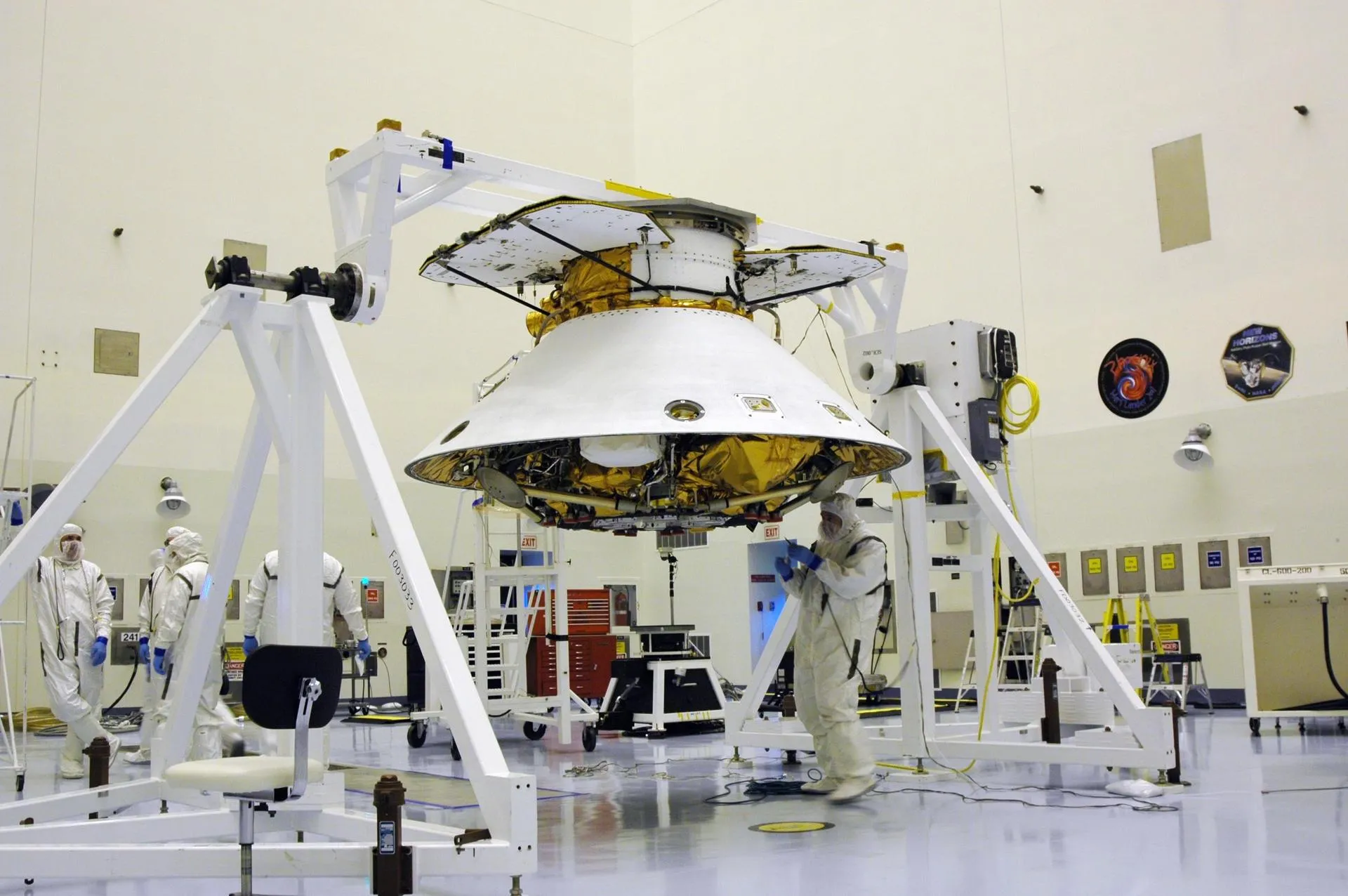
Phoenix launched on August 4, 2007, and touched down farther north on Mars than any mission before — the arctic plains at 68 degrees latitude, where orbiters had detected vast stores of subsurface ice. Its robotic arm scraped through inches of soil and exposed bright white material that visibly sublimated away over four days: the first direct contact with Martian water ice.
Phoenix’s onboard chemistry lab found the soil mildly alkaline, laced with perchlorate salts, and its weather station watched snow fall from Martian clouds. The solar-powered lander survived five months before the polar night extinguished it, exactly as designed, having confirmed that the raw ingredients of habitability lie frozen beneath the Martian arctic.